I Googled "Will My ADHD Son Ever Be Independent" At 2:30 AM
I've been waking him up every morning for 9 years. He's 14 now. And I just realized — I'm the only alarm that works.

By Amanda Torres
Mother of a 14-year-old with ADHD
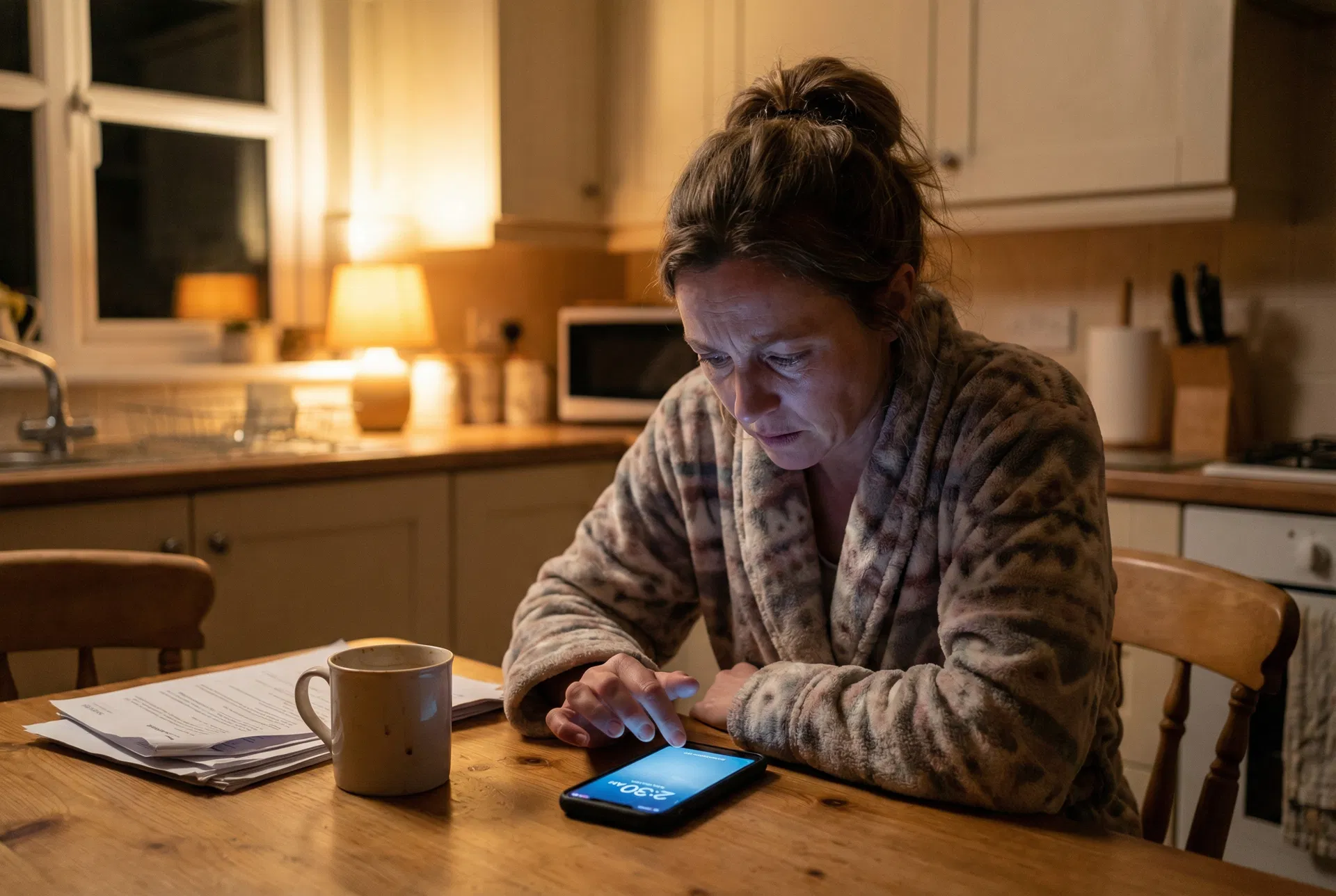
2:30 AM. The question I couldn't stop asking.
It was 2:30 in the morning when I finally typed it into Google.
"Will my ADHD son ever be independent?"
I sat there in the dark kitchen, phone screen glowing in my face, reading forum posts from other moms who were asking the same question. Some of their kids were 18. Some were 22. Still being woken up every morning by their parents.
My son Marcus is 14. He has ADHD. And for the last nine years, I have been his alarm clock.
Every single morning, I walk into his room at 6:45 AM and shake him awake. He doesn't hear alarms. I've tried everything — phone alarms, clock radios, vibrating phone under his pillow, multiple alarms set five minutes apart. Nothing works. He sleeps right through all of it.
"I've tried everything. Multiple alarms. Louder alarms. Consequences. Nothing changes."
At first, I thought it was just a phase. A kid thing. He'd grow out of it.
He didn't.
And now, at 14, I'm starting to do the math. In four years he'll be 18. In six years he might be in college. What happens when I'm not there to wake him up? What happens when he has a job and I'm not there at 6:45 AM?
That night at 2:30 AM, I wasn't just scared about tomorrow morning. I was scared about his whole future.
"The Sound Literally Never Reaches Them"
A few weeks after that 2:30 AM spiral, I mentioned it to Marcus's pediatrician at his annual checkup. I expected her to tell me to try a different alarm app.
Instead, she said something that stopped me cold.
"Amanda, the alarm isn't failing because Marcus is lazy. It's failing because ADHD brains filter out auditory signals during sleep. The sound literally never reaches him."
"ADHD brains filter out auditory signals during sleep. The sound literally never reaches them."
She explained that during deep sleep, the ADHD brain has a different relationship with sound than a neurotypical brain. The auditory processing pathway is essentially gated — the brain treats sound as background noise and doesn't escalate it to consciousness the way it should.
This is why Marcus could sleep through a blaring alarm that would wake me from three rooms away. It wasn't willpower. It wasn't attitude. His brain was literally not receiving the signal.
"So what do I do?" I asked. "I can't wake him up every morning for the rest of his life."
She nodded. "That's exactly the right question. Because there's a different pathway that works."
Why Vibration Works When Sound Doesn't
The doctor pulled out a small wristband and put it on my wrist. She pressed a button.
I felt a gentle pulse against my skin. Then another. Rhythmic, calm, impossible to ignore.
"Vibration goes through the skin, not the ears," she said. "It's a completely different neurological pathway. The ADHD brain can't filter it out the same way."
Why Vibration Reaches the ADHD Brain
Sound alarms go through the ears
The ADHD brain's auditory gate filters them out during sleep. The signal never reaches consciousness.
Vibration goes through the skin
Touch signals travel via the somatosensory pathway — a completely different route the ADHD brain cannot filter the same way.
The body wakes up first, then the brain
Instead of a jarring auditory shock, the nervous system receives a calm tactile signal. No panic. No fight-or-flight. Just a gradual, natural wake-up.
The wristband was called the Nymera CalmRise. It's designed specifically for kids with ADHD who can't wake up to sound alarms.
They wear it at night. It vibrates on their wrist at the set time. And — according to thousands of parents — they wake up on their own.
I was skeptical. I'd been skeptical of everything for nine years.
"Try it for two weeks," the doctor said. "If Marcus doesn't wake up independently, send it back."
The Morning I Didn't Have to Go In
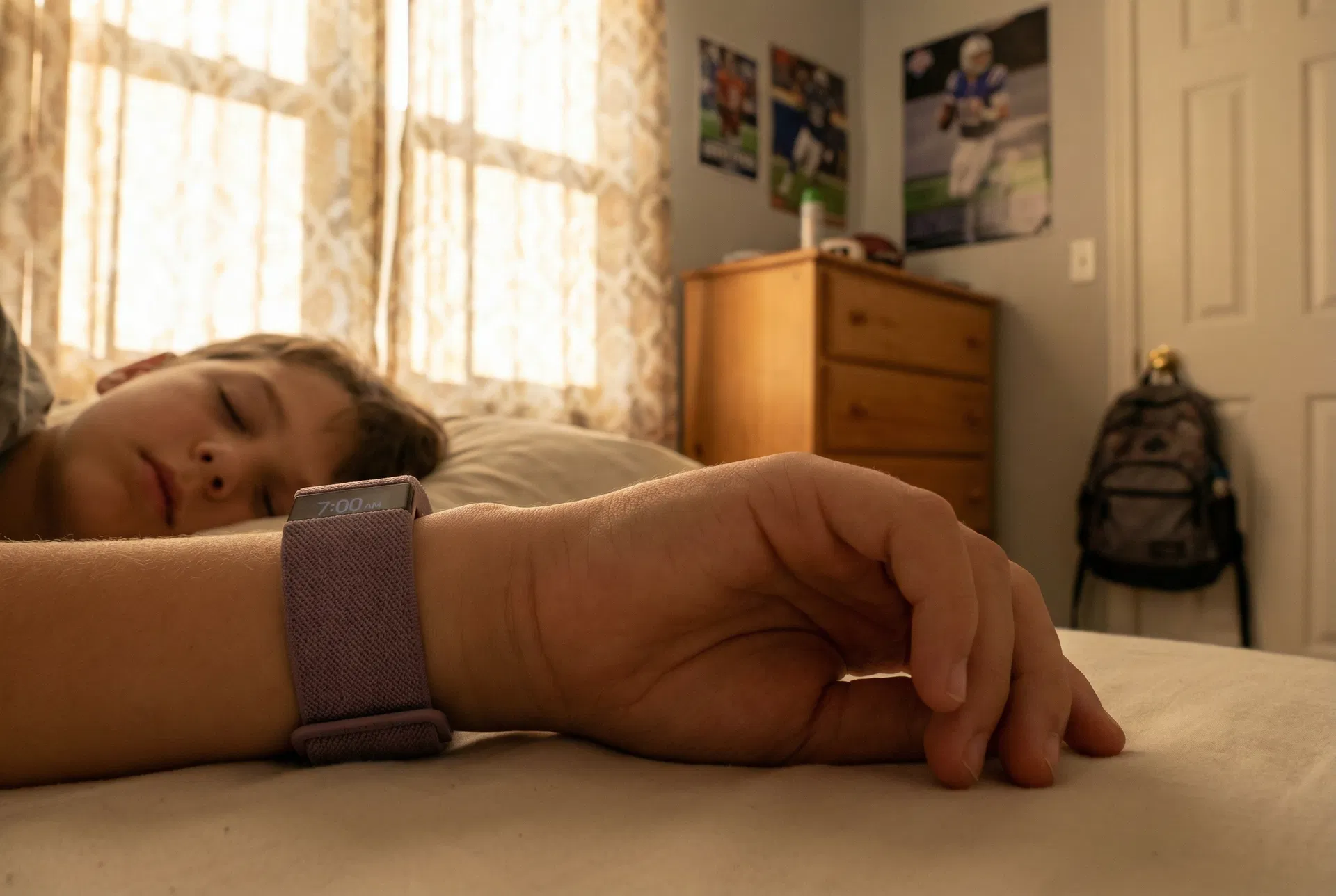
Night one. I barely slept, waiting to see what would happen.
I put the CalmRise on Marcus's wrist the first night. Set it for 6:45 AM. And then I lay in my bed, completely unable to sleep, listening for the usual sounds of him not waking up.
6:45 came.
I heard nothing.
I got up to go wake him — and stopped in the hallway. Because I could hear him moving around in his room. Dresser drawer opening. Closet door. The sound of him getting dressed.
I stood there in the hallway for a full minute, not believing it.
When Marcus came out of his room, he looked at me standing there in my pajamas and said, "Mom, why are you just standing in the hall?"
I started crying. Right there in the hallway at 6:48 AM.
"He woke up on his own. For the first time in nine years, I didn't have to go in."
That was six weeks ago. Marcus has woken up independently every single morning since then. Not once have I had to go in and shake him awake.
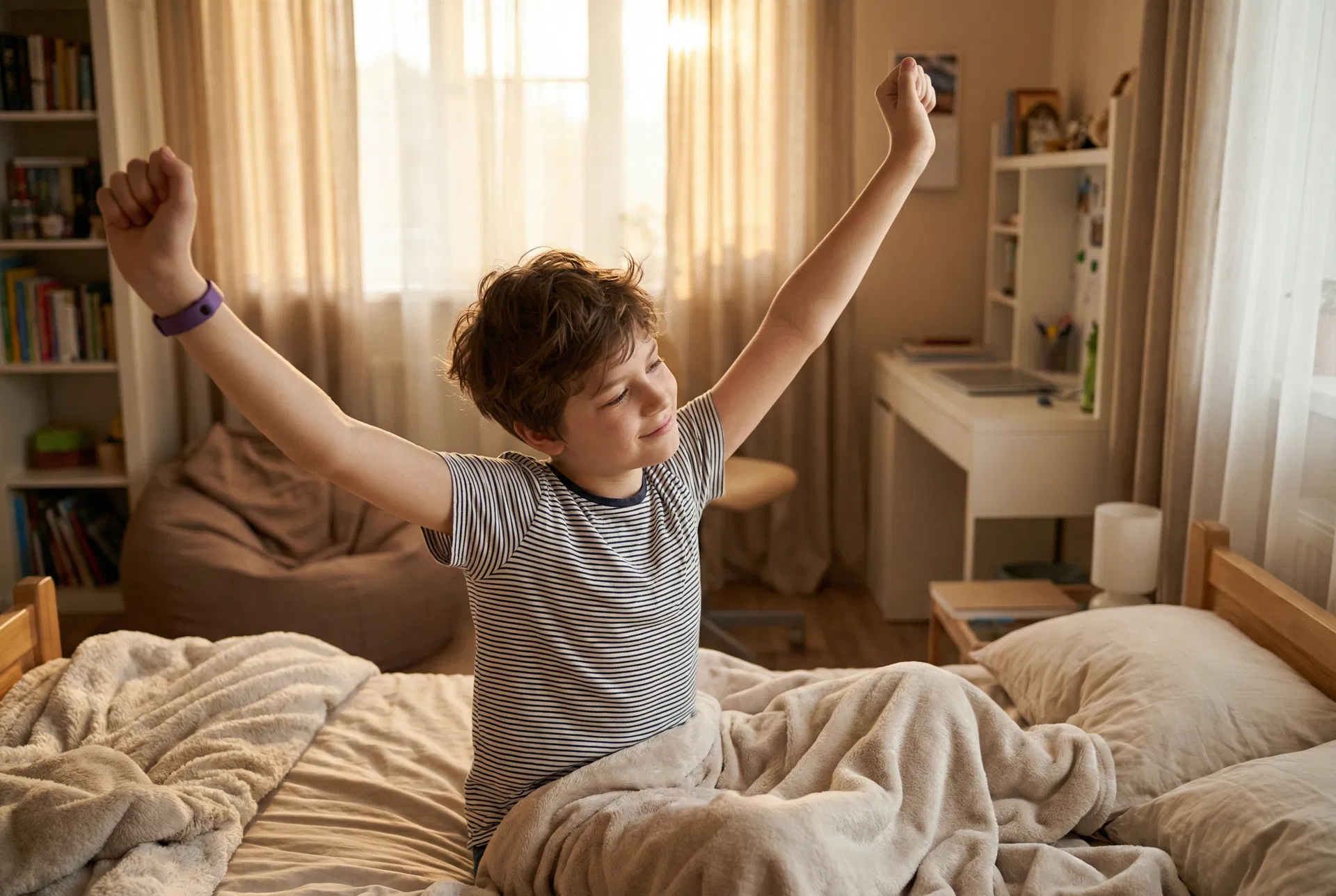
Week two. He was setting his own alarm time in the app.
But here's what I didn't expect: it's not just about mornings anymore.
Marcus is proud of himself. He talks about it. He told his dad, "I wake up on my own now." He told his friend at school. Something shifted in how he sees himself — like a small but real piece of independence clicked into place.
I don't lie awake at 2:30 AM anymore wondering if he'll ever be able to function without me. Because now I know: he can. He just needed the right tool.
Other Parents Are Saying the Same Thing
After I posted about this in my ADHD parenting Facebook group, I was floored by the response. Over 200 comments in two days. Turns out I wasn't the only one who'd been doing this for years.
"He woke up independently for the first time in 7 years"
My son is 16 and has ADHD. I have been his alarm clock since second grade. The first morning he woke up on his own with the CalmRise, he texted me from his room: 'Mom I woke up by myself.' I cried for an hour. He's been doing it every day for three weeks now.
— Michelle R., Austin, TX
"I was terrified about college. Not anymore."
My daughter got accepted to her first-choice school. I should have been celebrating. Instead I was panicking — she can't wake up to alarms. We tried CalmRise two months before she left for school. She's been waking up independently ever since. Her roommate doesn't even know she has ADHD.
— David K., Chicago, IL
"The independence piece is what got me"
It's not just that mornings are easier. My son (12, ADHD) has started setting his own alarm time in the app. He's started being responsible for his own wake-up. That's something I genuinely thought might never happen.
— Jennifer L., Seattle, WA
"We tried everything for 5 years"
Multiple alarms, reward charts, consequences, earlier bedtimes. Nothing. CalmRise worked the first morning. My son woke up, came downstairs, and made his own breakfast. I had to sit down because my legs went weak.
— Marcus T., Atlanta, GA
⚡ LIMITED TIME OFFER
Save 30% on Nymera CalmRise Today
Join 28,000+ families who ended the morning battle
GET 30% OFF CALMRISE NOW →60-Day Money-Back Guarantee · Free Shipping
- ✓ Kids waking up independently for the first time in years
- ✓ No more parent alarm clock dependency
- ✓ Improved self-confidence and sense of independence
- ✓ Better school attendance and less morning stress
- ✓ Kids taking ownership of their own morning routine
Common Questions
Why This Matters Right Now
Word about the Nymera CalmRise is spreading fast through ADHD parent communities. Pediatricians are recommending it. Schools are allowing kids to use it in class. Parent groups are sharing it daily.
Every morning your child can't wake up independently, the pattern gets more entrenched. Their brain learns to expect you to be the alarm. Their sense of self-efficacy around mornings gets smaller. And your anxiety about their future gets bigger.
The sooner you break the pattern, the easier it is to break.
What's Included with Nymera CalmRise
- ✓ Adjustable, comfortable wristband (fits ages 5+)
- ✓ Multiple alarm settings
- ✓ Vibration strength control
- ✓ Waterproof design
- ✓ Rechargeable battery (lasts 7+ days)
- ✓ Silent operation (won't wake siblings)
- ✓ Free smartphone app for easy setup
Two Choices
Choice One
Tomorrow morning, you walk into his room at 6:45 AM. Same as always. He's still asleep. You shake him awake. And somewhere in the back of your mind, that 2:30 AM question is still there.
Choice Two
Tomorrow morning, you wake up and wait. And from down the hall, you hear him moving around. Getting dressed. Coming out on his own. And you have your answer.
Imagine that morning. Now imagine a week of those mornings. A month. A year.
No more being the alarm clock. No more lying awake wondering. Just a kid who wakes up on his own — and knows he can.
⚡ LIMITED TIME OFFER
Special Offer — Save 30% Today
Get your Nymera CalmRise at the lowest price
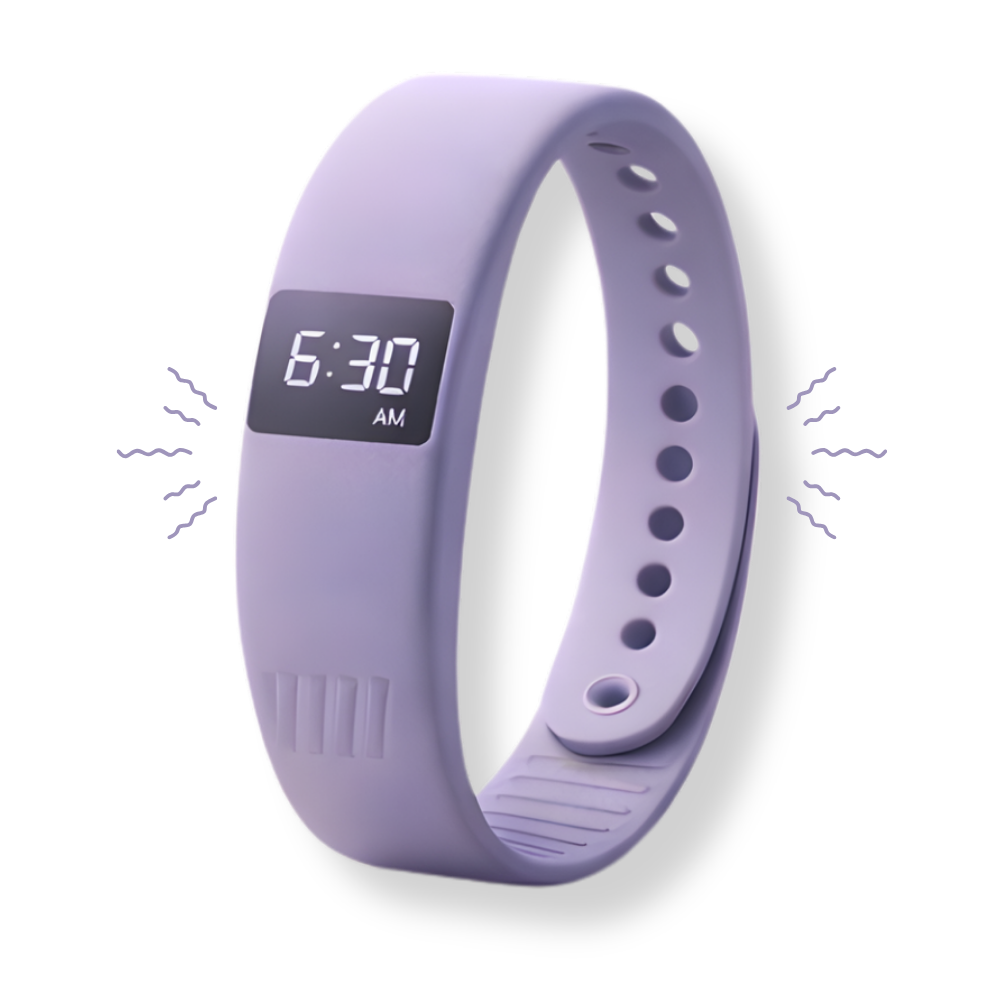
- ✓ Adjustable wristband (ages 5+)
- ✓ Waterproof & rechargeable
- ✓ 60-Day Money-Back Guarantee
- ✓ Pediatrician Recommended
- ✓ Free Shipping
Free Shipping · Limited Time · 60-Day Money-Back Guarantee
Your child's next independent morning is one click away.